Wireless chargers use electromagnetic fields to transfer energy from a charging pad to a device without cables, relying on coils in both the charger and device to generate and receive current.
How Wireless Charging Works
Wireless charging, also called inductive charging, transfers energy through electromagnetic induction. A transmitter coil in the charging pad generates an oscillating magnetic field when connected to power. A receiver coil inside the device picks up this magnetic field, inducing an electric current. The device then converts this current into direct current (DC) to charge its battery.
This process is based on Faraday’s law of electromagnetic induction, which states that a changing magnetic field can induce voltage in a conductor, and Ampere’s law, which explains how electric currents generate magnetic fields. The coils must be very close—usually just a few millimeters apart—for efficient energy transfer.
Types of Wireless Charging
Inductive Charging: Requires direct contact between the device and charger, such as placing a phone on a charging mat or using Apple’s MagSafe system.
Resonant Charging: Allows slightly more distance between the charger and device, using tuned resonant circuits to transfer energy more efficiently over a short gap
Wireless Chargers
Showing all 6 resultsSorted by price: low to high
- Sale!

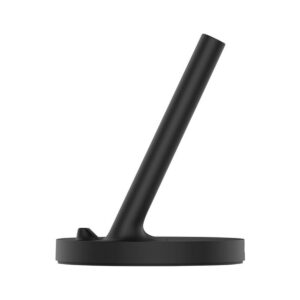
Xiaomi 20W Wireless Charging Stand
Original price was: R573,85.R521,69Current price is: R521,69. Add to basket - Sale!
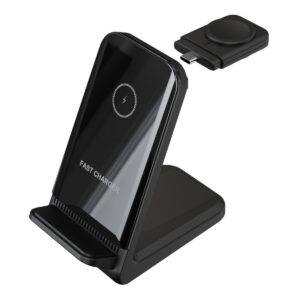
WINX POWER Easy Universal 3-IN-1 Wireless Charger
Original price was: R723,35.R657,59Current price is: R657,59. Add to basket - Sale!
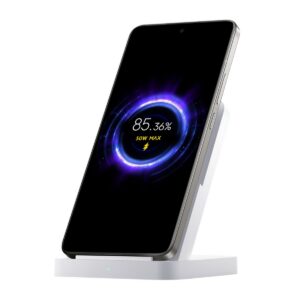
Xiaomi 50W Wireless Charging Stand Pro
Original price was: R1 321,35.R1 201,23Current price is: R1 201,23. Add to basket - Sale!
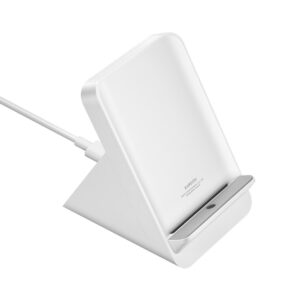
Xiaomi 80W Adaptive Wireless Charging Stand
Original price was: R2 701,35.R2 455,77Current price is: R2 455,77. Add to basket - Sale!
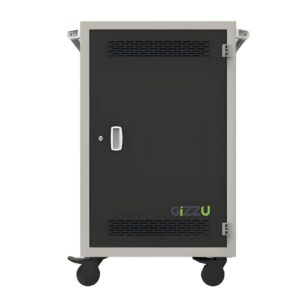
Gizzu Charging Trolley 36 Bay AC Power Socket
Original price was: R23 688,85.R21 535,31Current price is: R21 535,31. Add to basket - Sale!
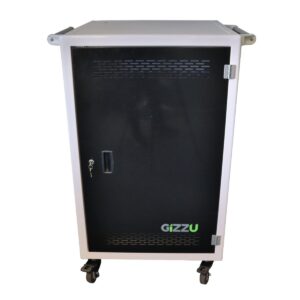
Gizzu 36 Bay Type-C Storage Charging Trolley for 15.6″ Laptops
Original price was: R34 498,85.R31 362,59Current price is: R31 362,59. Add to basket