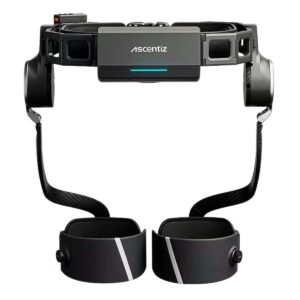
Exoskeletons are wearable devices designed to enhance human capabilities, such as strength, endurance, and mobility. They are increasingly adopted across various sectors, including healthcare, industry, and the military. Powered exoskeletons use motors and sensors to assist the user’s movements, making them ideal for tasks that require significant physical effort. In 2023, powered exoskeletons dominated the market, with the segment expected to continue growing due to advancements in technology and increasing demand across multiple industries. Passive exoskeletons rely on mechanical structures without motors to provide support, and they are generally lighter and used in settings where less intensive assistance is required. Healthcare is a significant driver of the exoskeleton market, with devices being used for rehabilitation, particularly for individuals with spinal cord injuries (SCIs) and other mobility impairments. Industry is also seeing increased use of exoskeletons to improve worker productivity and reduce the risk of injury. Military applications include enhancing soldier endurance and mobility, particularly in carrying heavy loads. Exoskeletons use a variety of actuation systems to function, with electric actuation dominating the market due to its efficiency and portability.
Exoskeleton Wearables
Showing all 9 resultsSorted by price: low to high